RFID PDAs
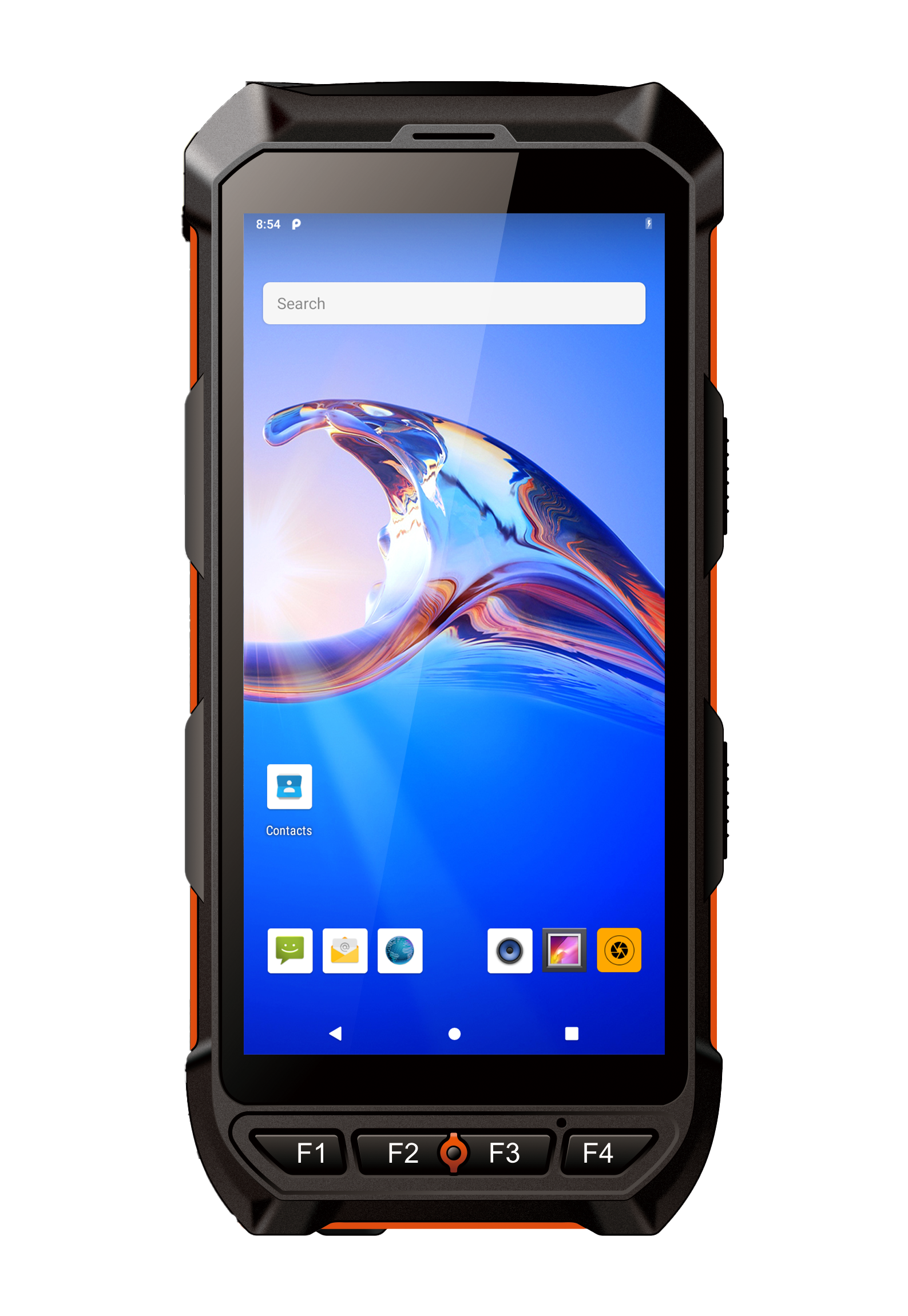
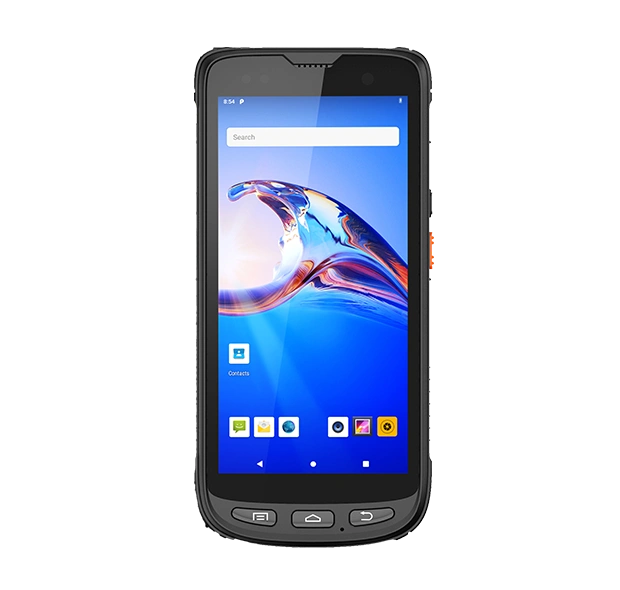
RFID PDAs, also known as RFID handhelds or mobile terminals, are compact and rugged mobile devices designed for the fast capture of products, assets and inventory directly at the point of use. They are ideal for warehouses, logistics, field service and retail environments where reliable data capture, faster workflows and greater efficiency in day-to-day mobile operations are essential.

Not sure which RFID PDA is right for you?
We provide personalized advice to help you choose the right RFID PDA.

Many RFID handhelds combine an RFID reader with an integrated 1D and 2D barcode scanner. This allows you to capture RFID tags, traditional barcodes, and QR codes using a single mobile terminal. This is particularly advantageous when different types of identification are used within a single application.
The C9 Handheld RED can be optionally equipped with 1D and 2D scanning. This allows, for example, products to be identified via barcode labels and load carriers or equipment via RFID tags. The captured data is then consolidated within a common RFID system, ERP system, or inventory management system.
RFID PDAs and mobile terminals can be connected to existing IT and RFID systems via Wi-Fi, Bluetooth, cellular networks, or USB. This allows captured data to be transmitted directly to ERP, WMS, MES, or asset management solutions.
Depending on the handheld, SDKs, APIs, and other development components are available for integration into custom software. This enables companies to incorporate functions such as identification, tracking, inventory management, and traceability into their existing processes. A properly configured RFID system improves data quality and supports automation in industry, logistics, and retail.
The abbreviation PDA stands for "Personal Digital Assistant". RFID PDAs are also frequently referred to as RFID handhelds, mobile terminals or mobile computers . These are compact, rugged mobile devices with an integrated RFID reader. An RFID PDA combines mobile data collection, RFID technology, and software into one handy system. Employees can capture, process, and transmit RFID tags, barcodes, and other information to a host RFID system directly on-site.
Unlike a simple RFID reader, the handheld features its own operating system, a touchscreen, and mobile communication interfaces. This allows applications to be run directly on the mobile terminal and the captured data to be processed immediately.
RFID PDAs and mobile terminals are used wherever products, assets, or inventory need to be identified and documented on the go. Typical applications include:
- Inventory and stock management
- Goods receipt and dispatch
- Order picking and shipping
- Asset tracking and equipment management
- Production and quality control
- Maintenance and servicing
- Supply chain traceability
- Mobile data collection in retail
- Identification in the healthcare sector
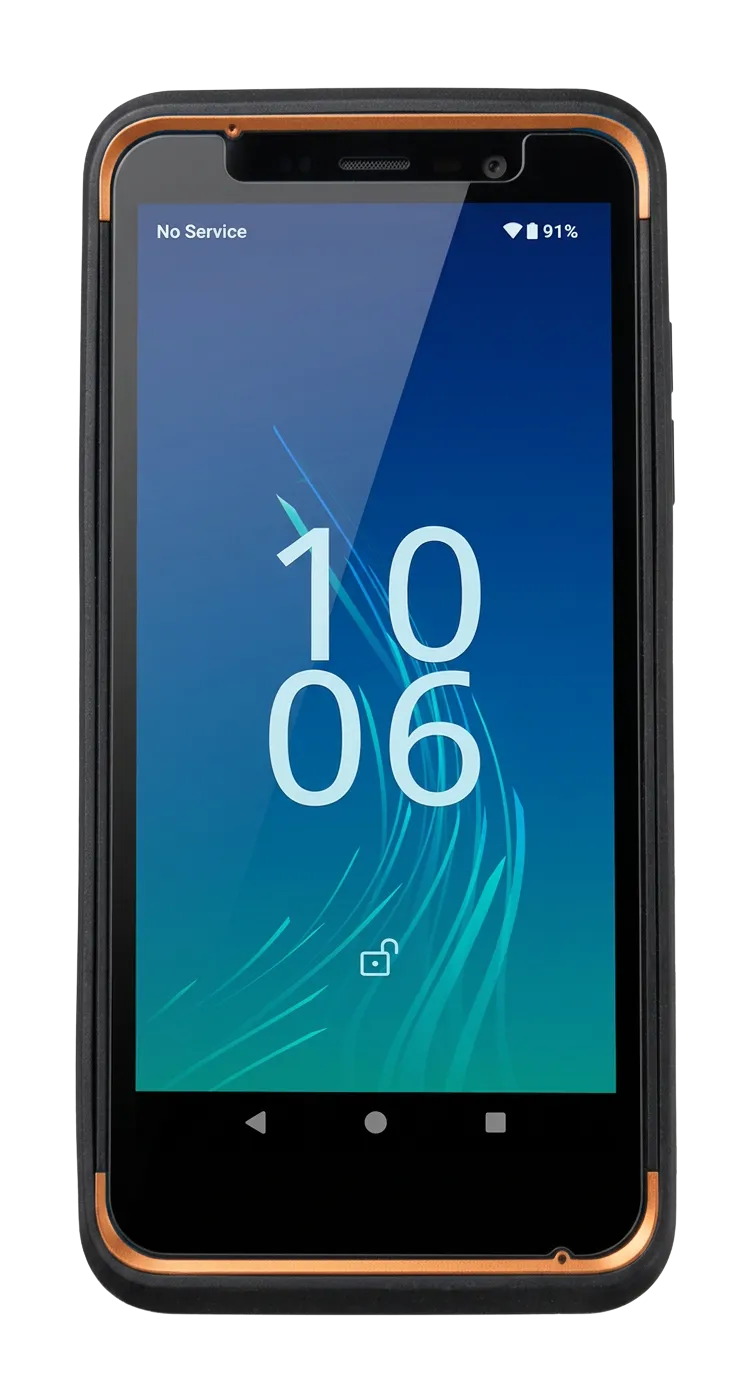
An RFID handheld reads the RFID chip in a transponder, RFID label, or RFID tag contactlessly and transmits the data to the software in use. For demanding healthcare applications, iDTRONIC offers, for example, the X14 Handheld HC with a robust IP68 housing as well as HF/NFC and an optional UHF reader.
An RFID PDA is a standalone handheld device with a display, operating system, software, and an integrated RFID reader. Data can be viewed, verified, and edited directly on the device. Mobile terminals therefore support fully digital workflows.
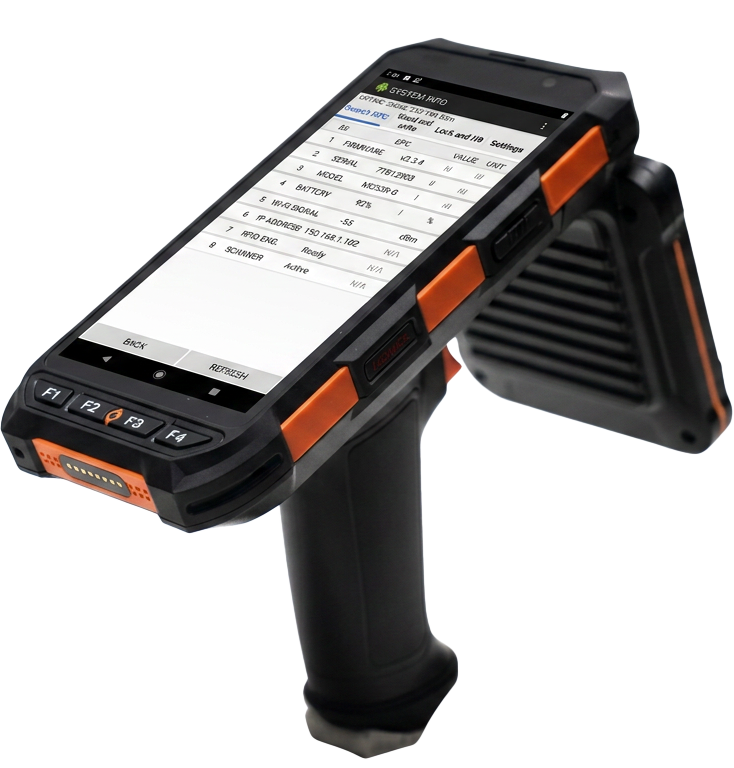
A simple RFID handheld scanner or RFID reader is primarily used for data capture and transmits information to a separate computer or mobile device. For particularly long UHF reading ranges, an RFID PDA can also be equipped with an ergonomic pistol grip. The C9 Gun RED, for example, combines the functions of a mobile terminal with a UHF RFID reader and achieves a reading range of up to ten meters.
When choosing an RFID PDA, RFID handheld, or mobile terminal, the RFID technology used, the required range, and the existing RFID tags are decisive factors. Other important criteria include:
- supported frequencies and RFID chips
- compatibility with existing transponders and RFID labels
- UHF, HF/NFC, LF, or LEGIC support
- integrated barcode and 2D code scanning
- display size and ergonomic operation
- Android operating system and software compatibility
- IP rating and durability
- battery life and available accessories
- Wi-Fi, Bluetooth, and cellular connectivity
- integration into existing RFID systems
- security, service, and technical support
- price in relation to features and application
The mobile terminal should be a good fit for the intended process in terms of technology, ergonomics, and functionality. iDTRONIC will assist you in selecting the right RFID PDA and provide advice on RFID technology, transponders, device features, and integration into your existing system landscape.
Depending on the model, an RFID PDA can support various frequency ranges and RFID technologies:
- UHF for longer ranges and the rapid scanning of multiple tags
- HF and NFC for short, controlled reading distances
- LF for specialized identification applications
- LEGIC for access, security, and enterprise applications
The C9 Handheld RED, for example, supports UHF, HF/NFC, LEGIC, and LF. Which RFID system is suitable depends on the existing RFID transponders, RFID chips, and the required range. RFID labels and transponders already in use must be compatible with the supported frequency and the specific standard of the RFID reader in the handheld.
Our Contact
We will help you find the right RFID solution for your requirements.
Your contact person:

Personal consultation for your RFID project
Benjamin Pfeiffer - Sales RFID

Personalized consulting for your RFID project
Andreas Jäger - Sales Director

Personalized consulting for your IoT project
Luca Mack - IoT Sales


.png)