RFID Tablets
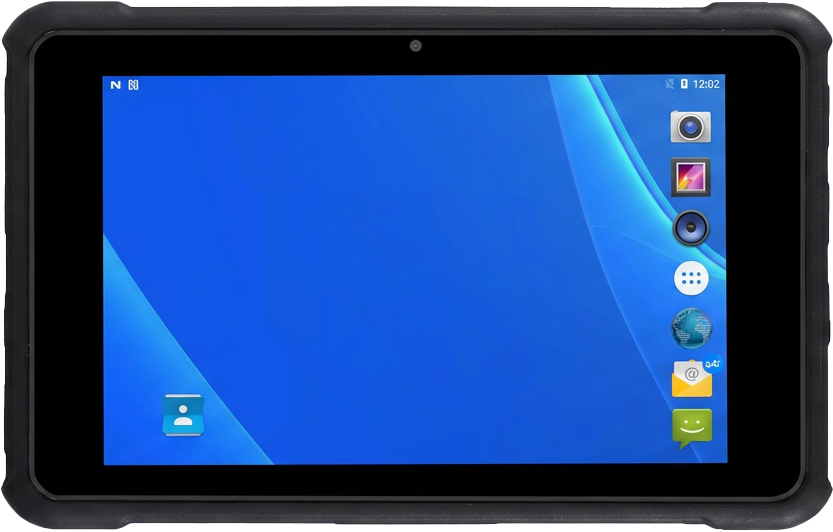
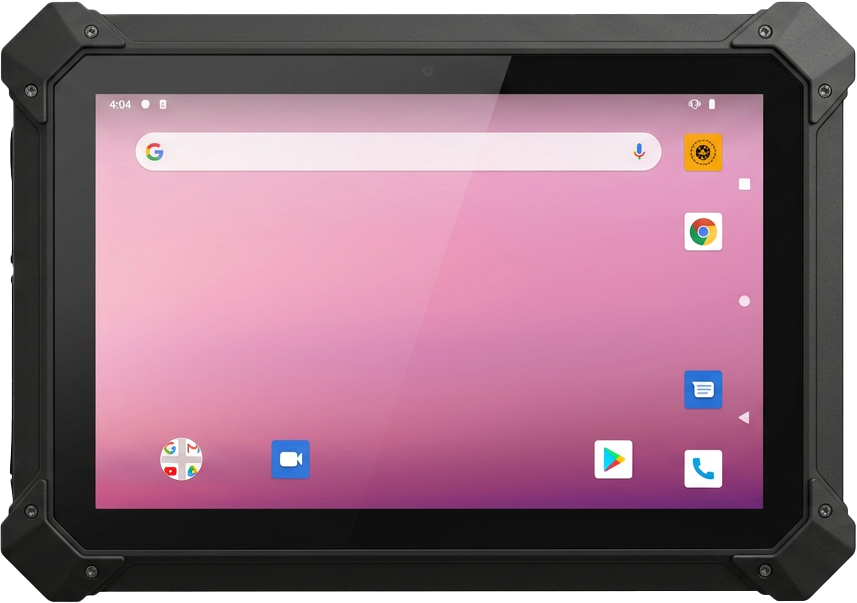
RFID tablets combine mobile data collection with the user-friendliness of a full-featured tablet. Integrated UHF, HF/NFC, or LF readers identify products, assets, and inventory directly on-site, eliminating the need for a separate scanning device. This allows for significantly faster and more accurate inventory counts, goods receipts, and stock checks in warehousing, logistics, and retail.

Not sure which RFID tablet is right for you?
We provide personalized advice to help you choose the right RFID tablet.

An RFID tablet is a mobile industrial tablet with an integrated or optional RFID reader. It combines the automatic identification of RFID transponders with a large touchscreen, powerful software, and mobile data collection. Depending on the model, the tablet supports UHF, HF/NFC, LF, or LEGIC. Captured information can be viewed, edited, and transmitted to host systems directly on-site.
RFID tablets are suitable for mobile applications in industry, logistics, retail, and healthcare. Typical areas of use include inventory management, goods receipt, order picking, stock control, asset tracking, as well as maintenance and production processes. For hazardous industrial environments, iDTRONIC also offers the C11 Tablet ATEX, a suitable solution for ATEX zones 2 and 22.
Depending on the configuration, an RFID tablet can support various frequency ranges and RFID technologies, including UHF, HF/NFC, and LF. UHF enables the rapid scanning of multiple transponders over longer distances and is particularly well-suited for logistics, inventory management, and asset tracking. HF, NFC, and LF are used for short, controlled read ranges.
Furthermore, iDTRONIC offers the C9 Tablet RED, an RFID tablet that supports LEGIC advant and LEGIC prime in addition to UHF, HF/NFC, and LF. This makes it ideal for identification, access control, and corporate applications where LEGIC media are already in use.
An RFID tablet offers a larger display and is particularly well-suited for processes that require displaying or entering extensive information alongside RFID data capture. This includes digital forms, inventory overviews, maintenance reports, and technical documentation.
An RFID handheld reader is more compact and optimized for rapid scanning and ergonomic one-handed operation. It is ideal for tasks such as inventory counts, order picking, and frequent scanning processes. Which device is better suited depends on your workflow, the required mobility, and the volume of data entry.
The read range of a UHF RFID tablet depends on the transmission power of the RFID reader, the integrated antenna, the RFID tag used, and the environmental conditions. Materials such as metal and liquids can affect detection. While NFC, HF, LF, and LEGIC are designed for short, controlled read distances, UHF enables identification over longer ranges. The actual read range should be tested with the intended transponders under real-world operating conditions.
Depending on the model and configuration, RFID tablets can scan 1D barcodes and 2D codes like QR codes in addition to RFID transponders. The combination of an RFID reader and barcode scanner is particularly advantageous when different identification technologies are used within a single process. For example, products can be identified via barcode, while load carriers, assets, or equipment can be identified via RFID scanner.
Depending on the model, RFID tablets can connect to existing IT systems via Wi-Fi, Bluetooth, cellular networks, or USB. Devices running Android or Windows operating systems offer flexible options for custom applications.
Using available SDKs, APIs, and libraries, captured RFID, LEGIC, and barcode data can be integrated into ERP, WMS, MES, access control, or asset management systems. The software used can control data collection, verify information, and transmit results directly to higher-level systems.
When choosing an RFID tablet, the supported RFID technology, the required read range, and the specific area of application are crucial. Other important criteria include:
- Display size and usability
- Android or Windows operating system
- IP rating and durability
- Battery life and charging options
- Wi-Fi, Bluetooth, and cellular connectivity
- Integrated or optional barcode scanner
- Software, SDK, and system integration
- Available accessories
- LEGIC support for access control and identification applications
- ATEX certification for hazardous areas
It is essential that the rugged tablet fits your intended process in terms of technology, ergonomics, and interfaces. iDTRONIC will help you select the right RFID tablet and provide advice on RFID technology, device configuration, and integration into your existing system landscape.
Our Contact
We will help you find the right RFID solution for your requirements.
Your contact person:

Personal consultation for your RFID project
Benjamin Pfeiffer - Sales RFID

Personalized consulting for your RFID project
Andreas Jäger - Sales Director

Personalized consulting for your IoT project
Luca Mack - IoT Sales



.webp)