
Products
Smart Access
- RFID
- RFID Cards
- RFID Wristbands
- RFID Key Fobs
- Access Readers & Terminals
- Full-Height Turnstiles
- Tripod Turnstiles
- Security Interlocks
- Swing Gates
- Full-Height Turnstiles
- Electronic Locking Systems
- Locker Locks
Professional RFID
- RFID
- RFID Readers / Antennas
- RFID Embedded
- Mobile Data Collection
- RFID PDAs
- RFID Tablets
- RFID Scanners
Wireless IoT
- Outdoor Solutions
- Asset Tracker
- Temperature Tracker
- Animal Tracker
- Vehicle Tracker
- Indoor Solutions
- Indoor Tracker
- People Tracker
- Software Solutions
- IoT Platform
Applications
Smart Access
Professional RFID
Wireless IoT
Company
Wireless IoT
Asset tracking compared: RFID, BLE, or GPS – which technology is the right fit?
Date:
21.10.2026
Reading time:
5 min
Author:

Inhaltsverzeichnis
Companies increasingly want to know where their tools, machinery, and equipment are located. Especially in industry and logistics, searching for mobile assets can waste valuable time. asset tracking helps to automatically record locations and make movements traceable.
But which tracking technology is suitable for which application? While RFID tracking is primarily used for automatic identification, Bluetooth Low Energy (BLE) enables localization within buildings. GPS tracking is better suited for outdoor location monitoring. The differences lie not only in range and accuracy; the necessary infrastructure, energy consumption, and ongoing costs also play an important role in the selection process.
What tracking technologies are available?
Forasset tracking different technologies are used. First, a distinction must be made between identification and localization. Identification shows which object was detected at a specific point. Localization, on the other hand, provides information about where an object is located within an area or on a geographic map.
RFID tracking: Automatic identification of objects
TheRFID technology (Radio Frequency Identification) makes it possible to identify objects contactlessly via radio waves. For this purpose, RFID transponders are attached to equipment and detected by an RFID reader. Passive UHF RFID systems offer particular advantages: the transponders do not require a battery and, depending on the hardware and environment, can achieve ranges from several meters to over ten meters.
In logistics, RFID tracking for example, used to automatically document the movement of goods at entry and exit points. It can also be used in tool management to record when an asset was checked out or returned. The RFID range depends on the frequency and environmental conditions. While HF RFID is used for shorter distances, UHF RFID enables longer reading ranges and the simultaneous detection of multiple transponders.
However, continuous positioning is not easily possible with classic passive RFID systems. RFID is therefore particularly suitable for applications where objects need to be reliably identified at defined points.
BLE Tracking: Energy-efficient indoor localization
Bluetooth Low Energy (BLE) is frequently used for indoor tracking . Small BLE tags regularly transmit radio signals that are received by stationary gateways. Based on these signals, objects can be assigned to specific rooms or areas.
One example is tool tracking in production halls. If tools are equipped with BLE tags, the system can detect which area they are in. This means employees no longer have to search through different halls to find a specific piece of equipment.
The accuracy of indoor localization depends on the gateway infrastructure and the positioning method used. With simple systems, it is often possible to assign items to specific zones. For more precise positioning, the infrastructure must be designed accordingly.
One advantage of BLE is its low energy consumption. Depending on battery capacity and transmission interval, BLE tags can operate for several years. This makes the technology particularly suitable for monitoring large numbers of mobile assets.
GPS Tracking: Outdoor location monitoring
While RFID and BLE are often used inside buildings, GPS tracking is particularly suitable for outdoor tracking. GPS is a satellite-based navigation system. Modern trackers often use multiple global satellite systems (GNSS) to determine their position. Under good reception conditions, accuracy within a few meters is possible.
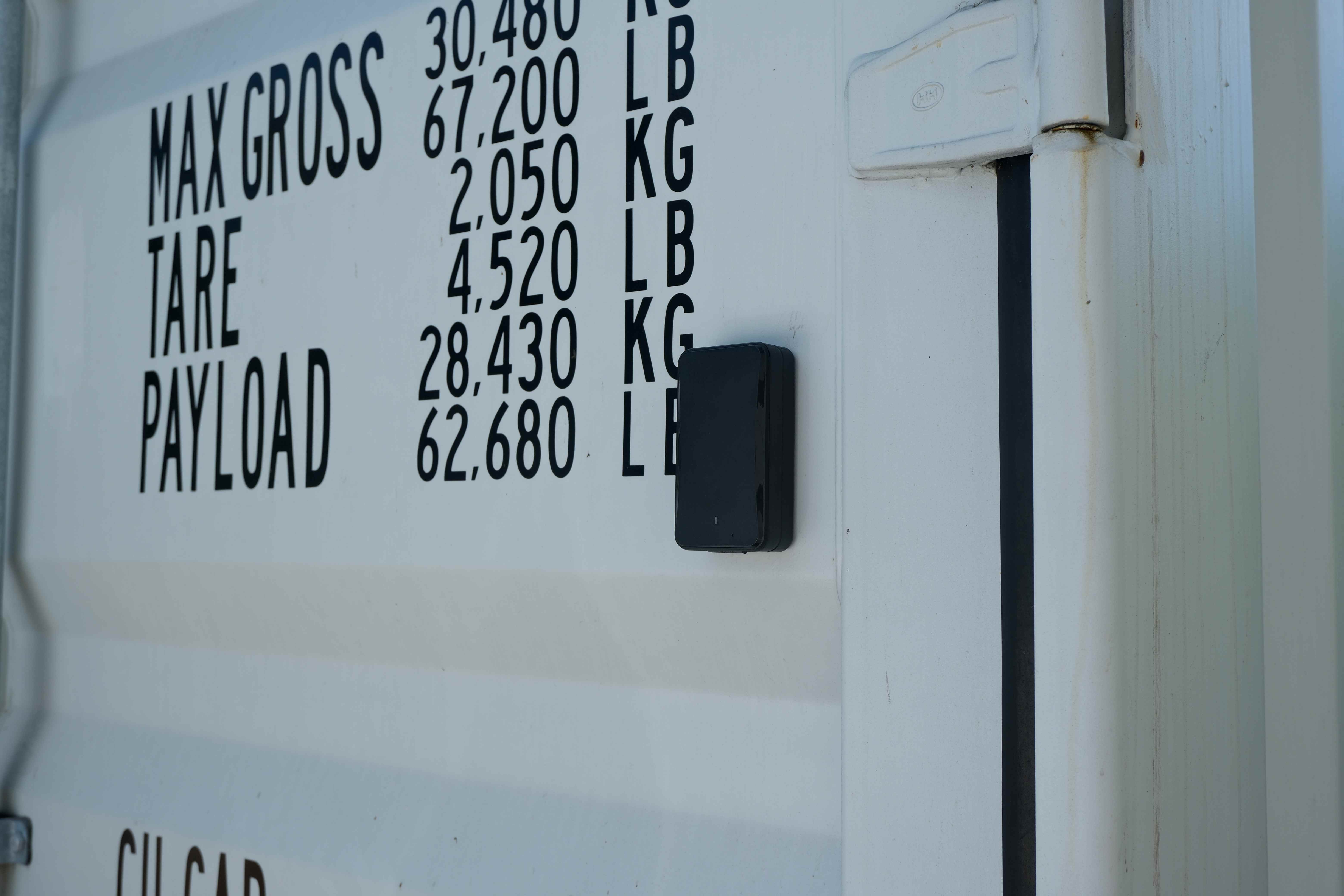
The determined location data is then transmitted, for example via mobile networks, to an IoT platform . There, companies can track where their assets are located and when they were moved. Typical applications include tracking construction machinery, trailers, or mobile load carriers. GPS can also be a suitable solution for monitoring cable drums on construction sites.
For battery-powered trackers, the transmission interval significantly affects battery life. If position data is transmitted only a few times a day, appropriately designed devices can operate for several years without a battery change. Inside buildings, however, GPS is less suitable, as structural obstacles can impair the reception of satellite signals.
Cellular: Reliable transmission of location data
Cellular technologies such as LTE-M and NB-IoT are frequently used for data transmission in IoT tracking. They allow location information to be sent to a central platform via public cellular networks. It is important to distinguish between cellular as a communication channel and cellular positioning.
A GPS tracker can determine its position via GNSS, for example, and then transmit it via LTE-M. Alternatively, an approximate location can be determined based on cellular towers. However, this is generally much less accurate than satellite-based positioning.
For companies with assets at various locations, the combination of GPS and cellular is particularly attractive, as no proprietary, area-wide gateway infrastructure is required. The prerequisite is suitable cellular coverage.
RFID, BLE, and GPS in direct comparison
The various tracking technologies differ in terms of range, accuracy, infrastructure, and energy consumption.
What factors influence the choice of tracking technology?
When deciding on a tracking system , one should not look exclusively at maximum range or positioning accuracy. Often, a less accurate solution is already sufficient and more economically viable.
Range and accuracy
First, it should be clarified where the assets are used and how precisely their position needs to be known.
For the automatic registration of goods at a warehouse gate, RFID may already be sufficient. If, on the other hand, the location of a tool within a production hall is required, BLE is often better suited.
For mobile assets that move over greater distances, GPS provides the appropriate foundation.
Infrastructure and battery life
The installation effort also differs significantly.
RFID requires readers and antennas at defined detection points. For BLE, gateways must be positioned to cover the relevant areas. GPS trackers do not require local tracking infrastructure, but they do need a suitable communication connection for data transmission.
Another factor is battery life. Passive RFID transponders operate without a battery, while BLE tags and GPS trackers require their own power supply. With GPS in particular, the frequency of position determination and data transmission affects energy consumption.
Acquisition and operating costs
TheAsset tracking costs consist of more than just the individual transponders or trackers. Infrastructure, installation, and maintenance must also be taken into account.
While passive RFID tags are comparatively inexpensive, additional costs arise for reading devices. BLE systems require gateways, and GPS trackers may incur ongoing mobile communication costs.
Therefore, the total cost over the planned service life is the deciding factor, not just the purchase price.
Which tracking technology is suitable for which application?
The technical differences are particularly evident in specific industrial and logistics applications.
RFID for warehousing and inventory management
When receiving or shipping goods, it is often necessary to identify many products within a short time. With UHF RFID , multiple transponders can be detected simultaneously without having to scan each object individually. This allows goods movements to be documented automatically and transmitted to existing warehouse management systems.
BLE for tool tracking and indoor tracking
In production halls, tools and mobile equipment are frequently moved between work areas. BLE tracking enables the automatic assignment of these objects to specific areas. The captured information can be displayed on a central platform and helps to reduce search times.
GPS for construction machinery and mobile equipment
On construction sites or during cross-site transport, companies often need to know where their machinery and equipment are located.
WithGPS trackers allow locations to be recorded and movements to be tracked. In addition, geofencing functions can be used to trigger notifications when an object leaves a defined area.
Can different tracking technologies be combined?
Not every application needs to be covered by the same technology. For example, a company can use RFID for tool checkout and BLE to track the location of items within a production hall. GPS complements location monitoring as soon as equipment is used outside the factory premises.
TheiDTRONIC IoT platform enables the centralized management of compatible trackers and provides a clear overview of their location information. Depending on the system used, movement histories can be viewed and automatic notifications configured. The integration of additional systems depends on the available interfaces.
Conclusion: Choosing the right tracking technology
RFID, BLE, and GPS fulfill different tasks within the asset trackingprocess. RFID is particularly suitable for automatic identification at defined points. BLE enables energy-efficient indoor localization, while GPS supports location monitoring of mobile equipment in outdoor areas.
The best solution is not necessarily the one with the highest accuracy. The decisive factor is what information is actually required for the specific use case.
iDTRONIC supports companies in selecting suitable RFID and IoT tracking solutionsto manage equipment more transparently and make operational processes more efficient.
Frequently asked questions about tracking technologies
What is the difference between RFID and GPS tracking?
RFID tracking identifies objects at defined detection points. GPS determines geographical positions via satellite signals and is particularly suitable for location monitoring in outdoor areas.
Which tracking technology is suitable for indoor tracking?
BLE tracking is suitable for localization within buildings. Using BLE tags and gateways, assets can be assigned to specific rooms or areas.
Which tracking technology works without a battery?
Passive RFID transponders do not require their own battery. In contrast, BLE tags and GPS trackers usually have their own power supply.
Which tracking technology is the most cost-effective?
Passive RFID transponders have low unit costs. However, the cost-effectiveness of an entire tracking system also depends on the infrastructure and ongoing operating costs.

Contact us
We are happy to provide personal advice on choosing the right solution.
Your contact person:
Personalized consultation for your RFID project
Luca Mack

Personal consultation for your RFID project
Andreas Jäger - Sales Director

Personal consultation for your IoT project
Luca Mack - Sales IoT