
Products
Smart Access
- RFID
- RFID Cards
- RFID Wristbands
- RFID Key Fobs
- Access Readers & Terminals
- Full-Height Turnstiles
- Tripod Turnstiles
- Security Interlocks
- Swing Gates
- Full-Height Turnstiles
- Electronic Locking Systems
- Locker Locks
Professional RFID
- RFID
- RFID Readers / Antennas
- RFID Embedded
- Mobile Data Collection
- RFID PDAs
- RFID Tablets
- RFID Scanners
Wireless IoT
- Outdoor Solutions
- Asset Tracker
- Temperature Tracker
- Animal Tracker
- Vehicle Tracker
- Indoor Solutions
- Indoor Tracker
- People Tracker
- Software Solutions
- IoT Platform
Applications
Smart Access
Professional RFID
Wireless IoT
Company
Professional RFID
How a sports car manufacturer is simplifying its vehicle diagnostics
Date:
28.08.2026
Reading time:
5 min
Author:

Inhaltsverzeichnis
A test vehicle full of cables, an engineer kneeling in the footwell with a diagnostic device – this was the standard for vehicle diagnostics at a global German sports car manufacturer for a long time. Accessing CAN bus data from control units was time-consuming and frustrating.
The problem was well-known: accessing CAN bus data required special readers, usually connected via OBD-II or a proprietary interface. Every functional test and error analysis meant re-cabling and maneuvering bulky diagnostic hardware.
The manufacturer wanted to change this and turned to one of our integrator partners to develop the software for a new solution. We were brought in to handle the hardware.
From Desktop Reader to CAN Bus Diagnostic Tool
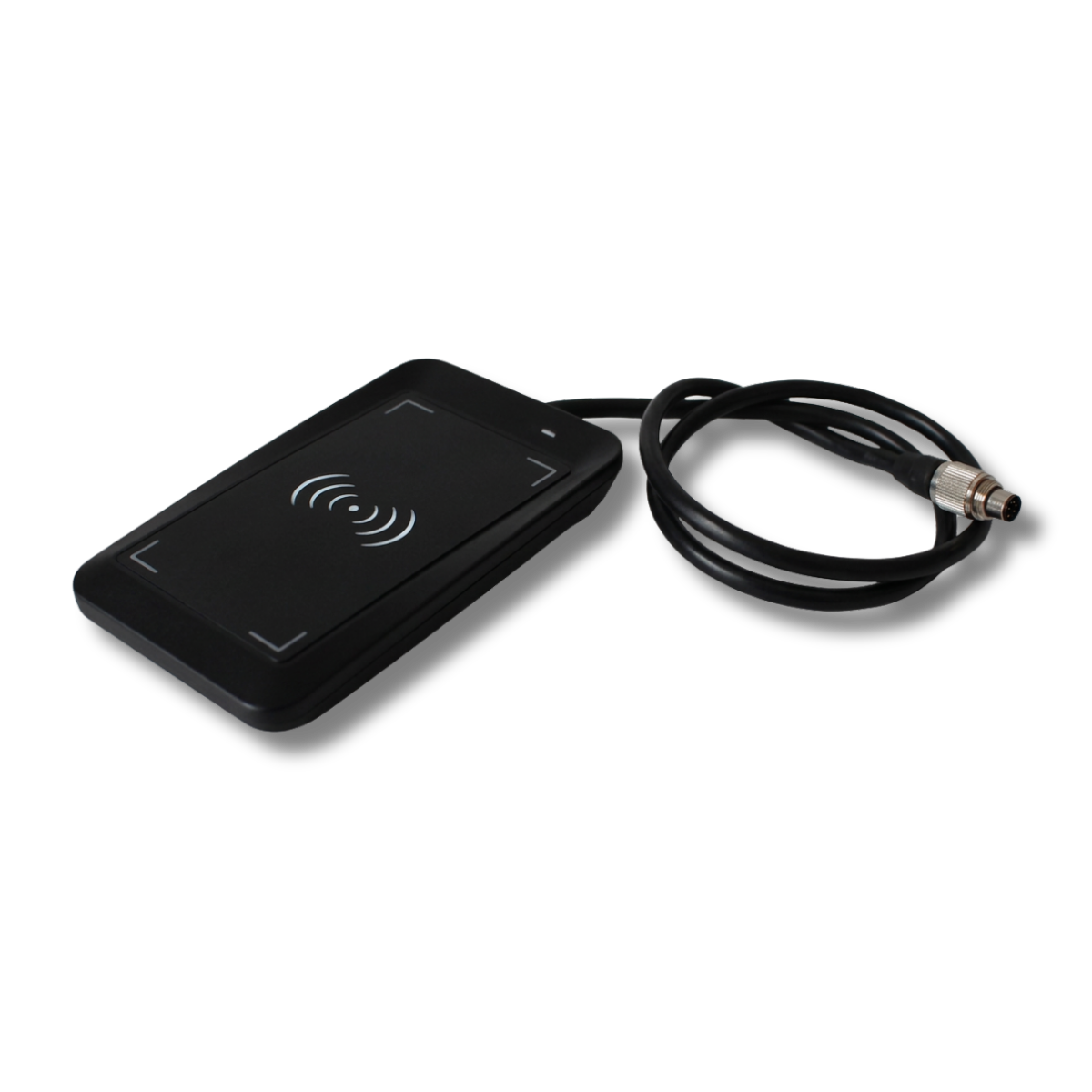
We took our proven NEO 2 HF/NFC Desktop Reader as a foundation and developed a device specifically tailored to the requirements of vehicle diagnostics. A CAN 2.0-compliant CAN bus interface communicates directly with the control units, while an integrated ISO 14443 Type A NFC interface provides the contactless connection to the smartphone.
The real challenge lay in the firmware. It had to interpret the diverse, variably structured raw CAN bus data, compress it, and convert it into the standardized NDEF format so it could be read via NFC.
We also refined the hardware: a 5-pin M8 CAN bus connector ensures a robust connection, and the housing is designed to withstand the shocks and temperature fluctuations encountered during test operations.
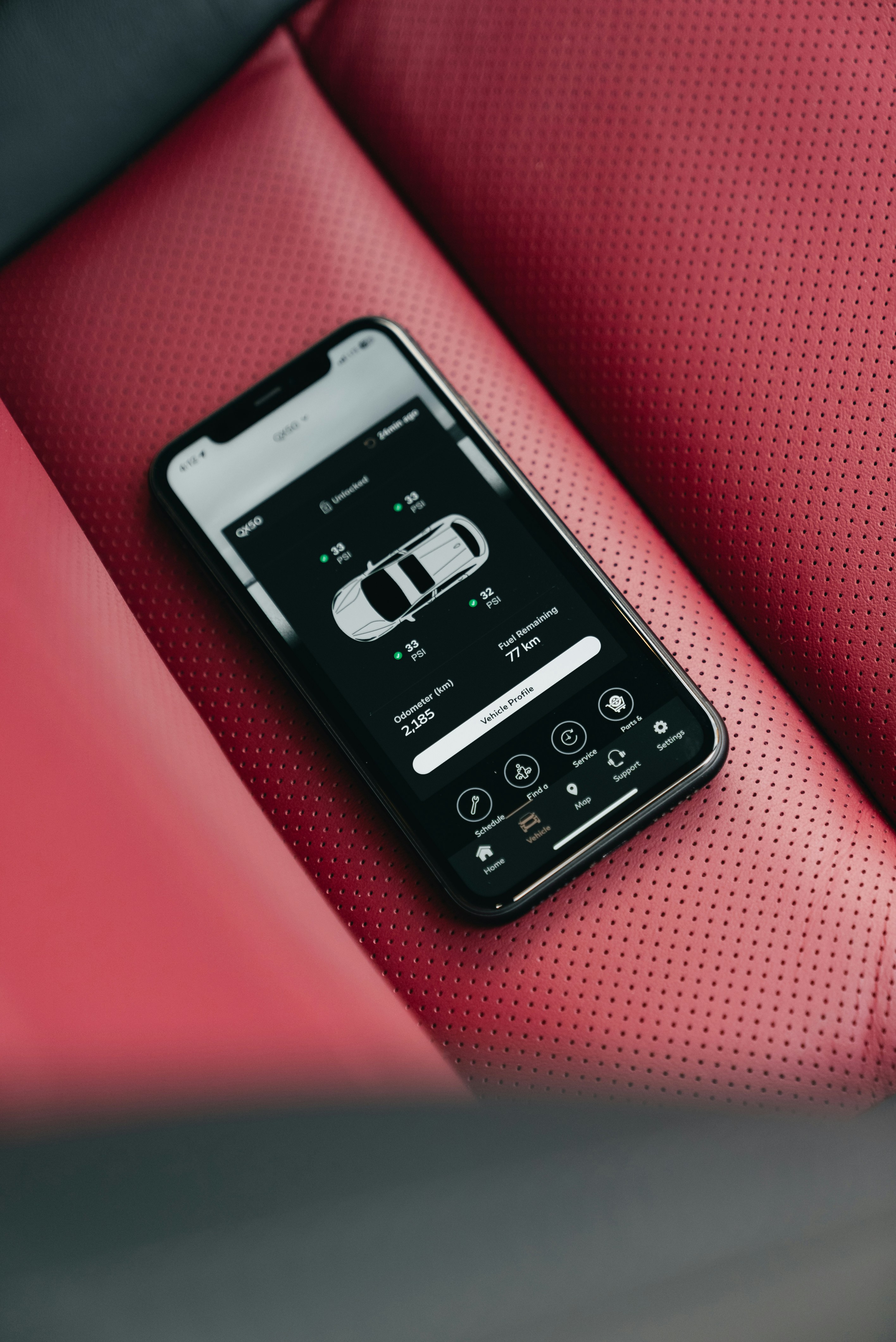
Here is how it works in practice: the reader is connected to the CAN bus connected to the vehicle. No additional wiring is required for the actual analysis; all you need is a smartphone. In the so-called reader-to-reader mode, the smartphone itself becomes an active reader. It retrieves the processed data contactlessly and displays or saves it in real time.
Development took five months. A consultation with the integrator client clarified the requirements at the outset, an implementation proposal was agreed upon and adjusted, and prototypes were created, which we tested under real-world conditions. Only after these tests did we finalize the firmware.
Diagnostics without detours
The reader is still wired, which is unavoidable with a direct CAN bus connection. The difference lies in the readout process. Instead of an additional diagnostic device, an NFC-enabled smartphone is now all you need to retrieve data contactlessly and in real time.
For engineers, this means less effort at the vehicle and faster results during every test drive. This accelerates prototype development and makes mobile diagnostic processes in the automotive industry a bit more practical.
Are you facing a similar challenge? We look forward to hearing from you.

Contact us
We are happy to provide personal advice on choosing the right solution.
Your contact person:
Personalized consultation for your RFID project
Benjamin Pfeiffer

Personal consultation for your RFID project
Andreas Jäger - Sales Director

Personal consultation for your IoT project
Luca Mack - Sales IoT